PNJP – The leading jewelry manufacturer in Vietnam

News

In the first half of 2026, the global jewelry landscape is undergoing a profound transformation, shifting from mere status signaling to a powerful medium of self-expression and emotional storytelling. Driven by a global middle class expected to grow by over 1 billion people, demand for gold, diamonds, and fashion jewelry is surging, particularly in high-growth regions.

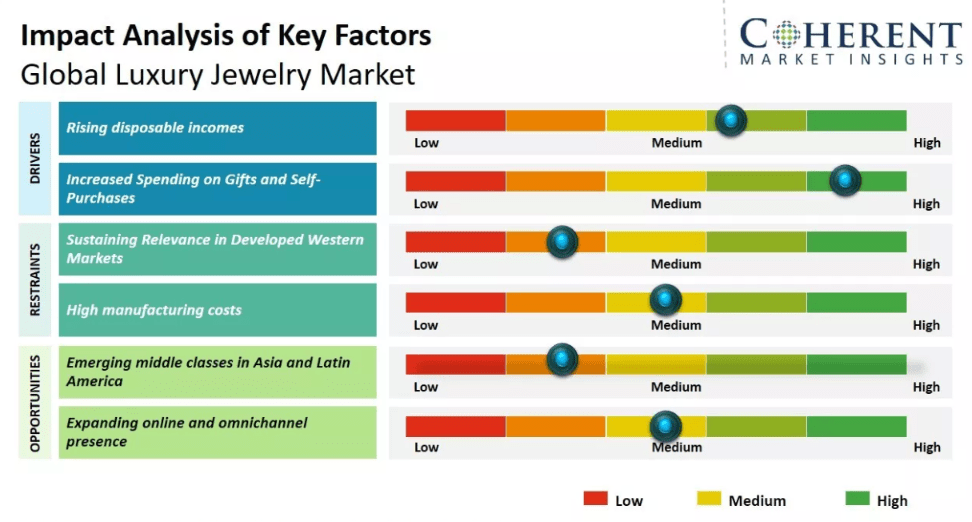
Impact Analysis of Key Factors in Global Luxury Jewelry Market (Coherent Market Insights, 2026)

1. The Global Shift: Asia-Pacific Takes the Crown

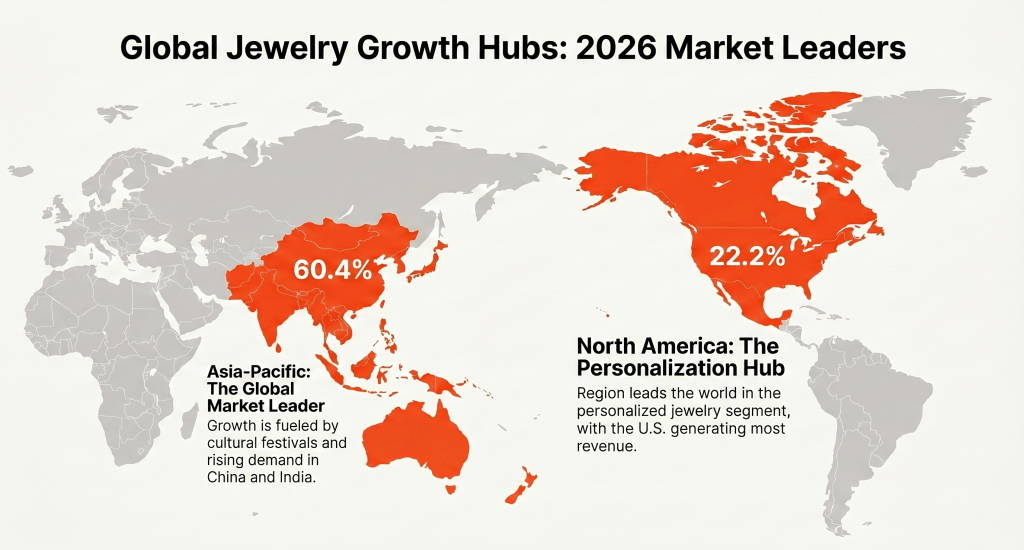
The center of gravity for the jewelry trade has decisively shifted. The Asia-Pacific (APAC) region now dominates the global market, accounting for a massive 60.4% share (Grand View Research, 2026). While China remains the largest player due to its deep-rooted gifting culture and mix of heritage and contemporary brands, India is the “rising star,” projected to grow at the fastest CAGR of 6.5% through 2033 (Grand View Research, 2026).

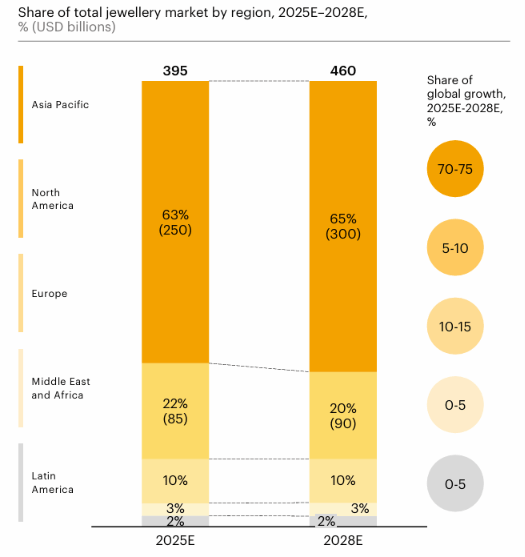
Share of Total Jewelry Markey by Region (McKinsey Company, 2026)

The Asia Pacific region is the undisputed engine of the global jewelry market, projected to expand its dominant share to 65% by 2028 (McKinsey Company, 2026)This clear shift means brands can no longer rely solely on mature markets like North America. To stay profitable as those markets slow down, they need to target booming emerging economies. 

Meanwhile, North America maintains its lead in the personalized segment with a 22.2% market share, and the Middle East – led by Dubai – has solidified its position as the premier global hub for gold and jewelry trade (Grand View Research, 2026).

Global Jewelry Growth Hubs 2026: Market Leaders

2. The $56 Billion Personalization Standard

Personalization is no longer a niche service; it is a standard consumer expectation projected to reach USD 56.87 billion in 2026 (Business Research Insights, 2026). 

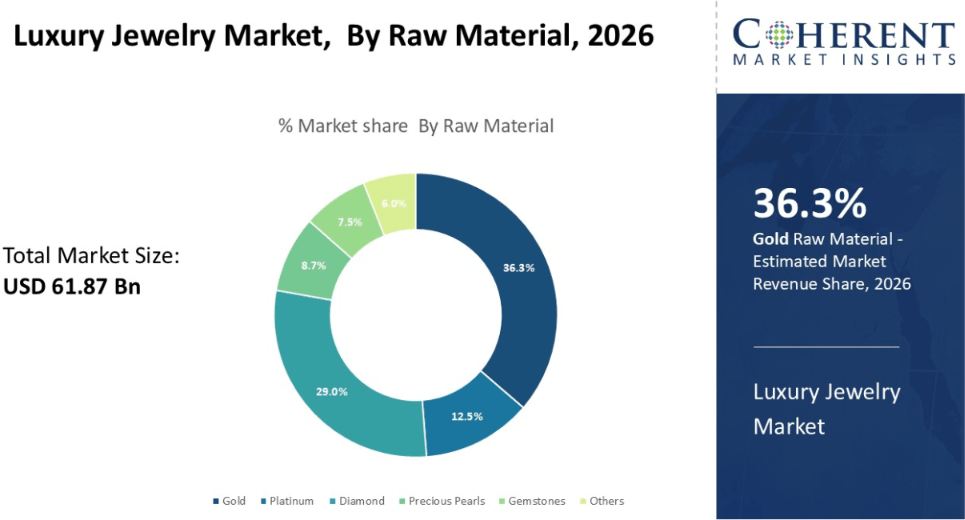
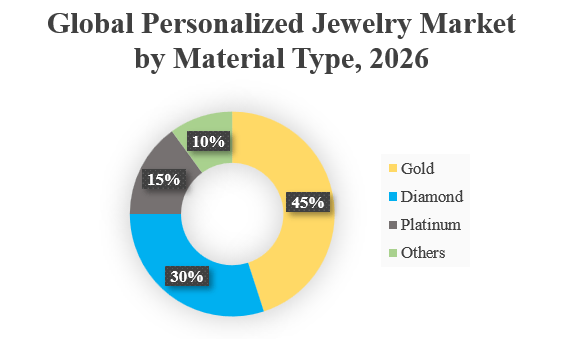
Gold is the Preferred Choice: Representing 45% of the material mix in personalized assortments, gold is favored for its versatility in engraving names and symbols for sentimental gifts (Business Research Insights, 2026). 

Luxury Jewelry Market Share by Raw Material (Coherent Market Insights, 2026) 

The Asia Pacific region is the undisputed engine of the global jewelry market, projected to expand its dominant share to 65% by 2028 (McKinsey Company, 2026)This clear shift means brands can no longer rely solely on mature markets like North America. To stay profitable as those markets slow down, they need to target booming emerging economies. 

Meanwhile, North America maintains its lead in the personalized segment with a 22.2% market share, and the Middle East – led by Dubai – has solidified its position as the premier global hub for gold and jewelry trade (Grand View Research, 2026).

Global Personalized Jewelry Market by Material Type, 2026

Gold is the most dominant material in the global market generally and the personalization market specifically despite its high price. This to some extent suggests that when adding a personal touch, buyers are willing to absorb a high price tag for a material known for its lasting financial value. 

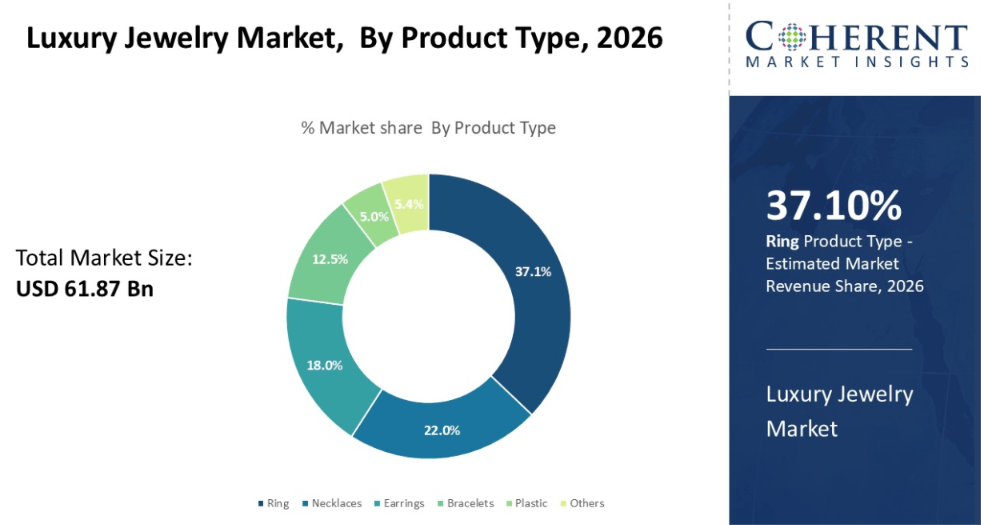
The Power of Rings: This segment leads the trend with a 32.68% market share, driven by the rising demand for unique engagement and marital symbols (Business Research Insights, 2026). 

Luxury Jewelry Market Share by Product Type (Coherent Market Insights, 2026) 

The chart above highlights rings as the dominant product in the overall luxury jewelry market, capturing a 37.10% share. This strong global demand provides a solid foundation that naturally translates into the personalization sector. As a result, consumers consistently choose rings as their preferred medium for customized, story-driven designs. 


Emotional Value Over Status: Approximately 75% of consumers now view jewelry as a form of self-expression, with 71% prioritizing unique, story-driven designs over traditional status symbols (McKinsey Company, 2026). 

3. The “New Frontier”: Explosive Growth in Men’s Jewelry 

One of the most significant opportunities in 2026 is the rapid expansion of the men’s segment. Younger men (ages 18–30) are spearheading this movement, with a projected CAGR of 9.3% (POLARIS Market Research,2026). 

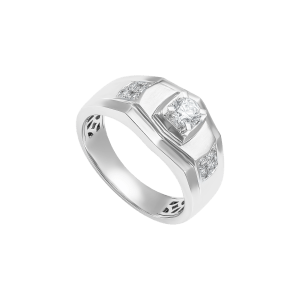
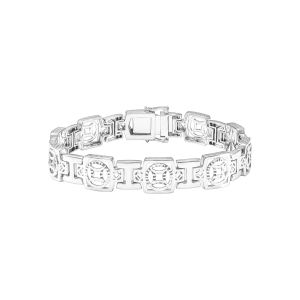
Minimalist Aesthetics: Modern male consumers are gravitating toward rings and bracelets that feature masculine patterns and luxury materials like Platinum, which is associated with exclusivity. 

Versatility: Bracelet attachments are growing rapidly as they allow men to switch seamlessly between casual and formal aesthetics.

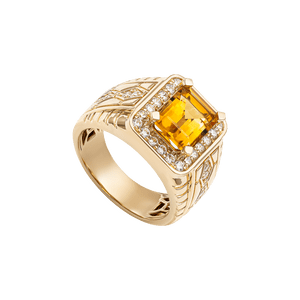
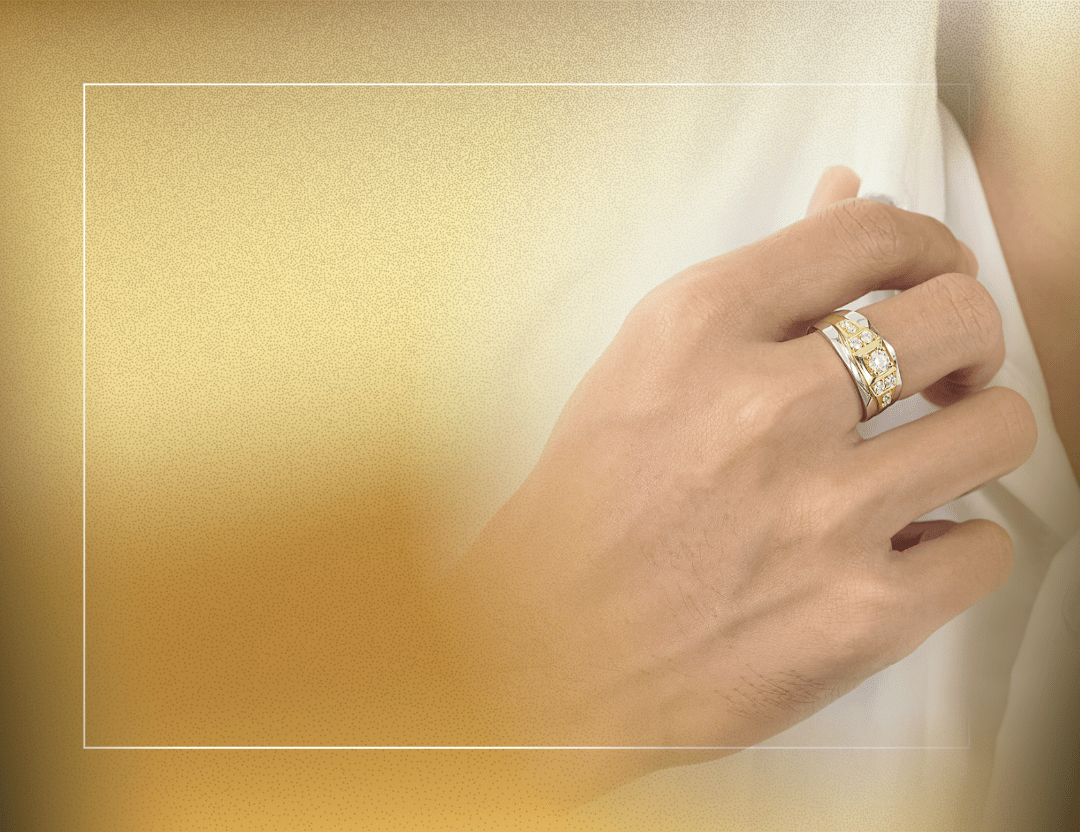
To meet these surging demands, PNJ introduces MANCODE – a definitive curation of modern men’s luxury:

4. Overcoming Supply Chain Bottlenecks

Despite high demand, brands face significant hurdles. Maintaining quality in mass-produced personalized items often leads to production bottlenecks. Furthermore, 68% of High Jewelry brands have reported procurement delays for ethical gems and rare materials (Intel Market Research, 2026). 

To stay competitive in H2 2026, sourcing priorities must shift toward: 

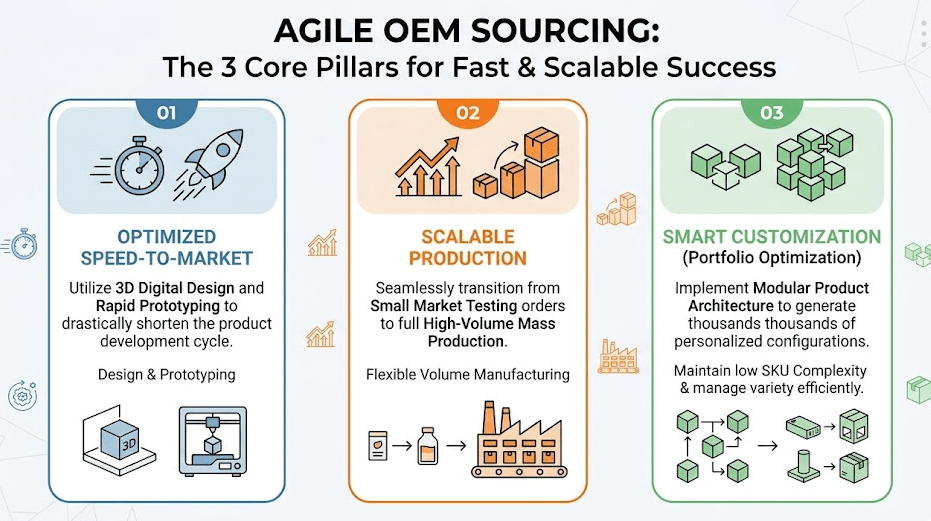
Modular Design: Using configurable systems to offer thousands of personalized combinations without the burden of managing unique SKUs. 

Speed-to-Market: Adopting digital design and rapid prototyping to drastically shorten traditional development cycles. 

3 Core Pillars for Fast & Scalable OEM Sourcing

5. Partnering for Success: The PNJ Production Advantage

As an established OEM/ODM manufacturer, PNJ Production (PNJP) acts as a strategic bridge between intricate craftsmanship and industrial-scale efficiency. 

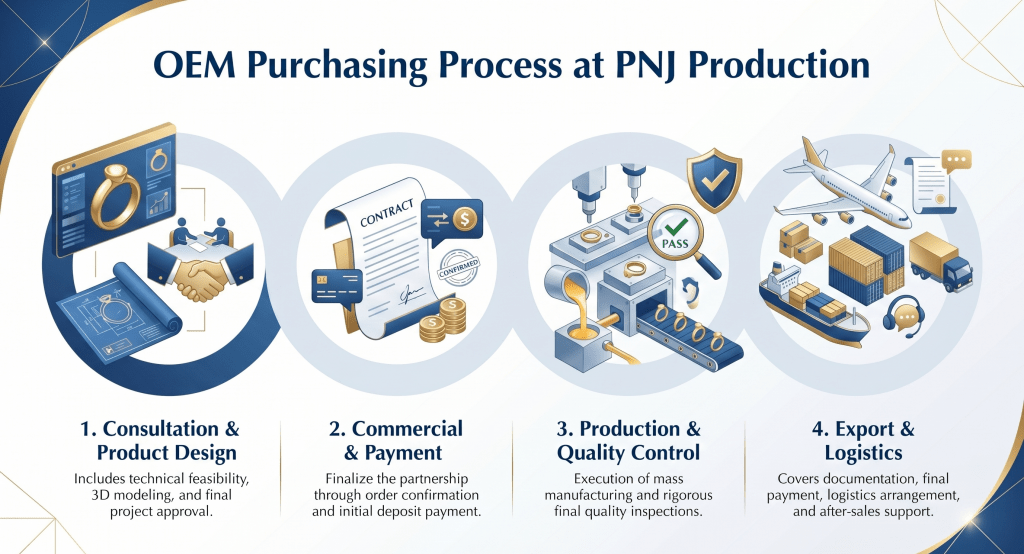
Concept-to-Creation: PNJP can develop high-quality jewelry from simple sketches, samples, or conceptual ideas, handling the entire 3D design and prototyping process in-house. 

Scalable Flexibility: The facility supports emerging brands with small-batch testing while providing the infrastructure for large retailers to scale mass production. 

International Compliance: With rigorous quality control and international certifications, PNJP helps global brands mitigate sourcing risks and meet market-specific regulatory standards.

OEM Purchasing Process at PNJ Production

6. Conclusion

Success in the latter half of 2026 will be defined by agility. Brands that can deliver high-quality customization with speed-to-market will be best positioned to capture the growing demand for self-expression.

Ready to elevate your H2 2026 collections?

Contact PNJP’s experts today to explore our flexible OEM/ODM solutions tailored for the global market.

Related News